All 18 modules
Work

Compensation Studies

Reasonable compensation is the S-corp exam issue, and what defends a number is never the number — it is the working behind it, written down at the time. This builds both, from what the shareholder actually does and federal wage data, and files the signed memo on the client.

A reasonable-compensation study in LedgerOS: proposed duties, each matched to an SOC occupation code and wage percentile.

What it does

  • Describe the role in a sentence; it proposes the duties and you correct them
  • Wages from the Bureau of Labor Statistics survey, by occupation code and area
  • A percentile per duty, weighted by how much of the year each one takes
  • An investor cross-check: does what is left still earn a fair return on their equity
  • A signed PDF memo on your letterhead, filed to the client as a workpaper

How it works

It starts from what the shareholder actually does

Describe the role the way you would to a colleague and it comes back with three to six duties, each matched to an occupation code. You correct them — that is the point of the step. Someone who spends a third of the year selling and two thirds preparing returns is two duties at two different wage bases, and no single job title says that.

  • The model can only choose codes that have published wage data behind them
  • Every duty carries your share-of-time split and the percentile you picked
  • Tax year, geography, annual hours and years of experience are all inputs
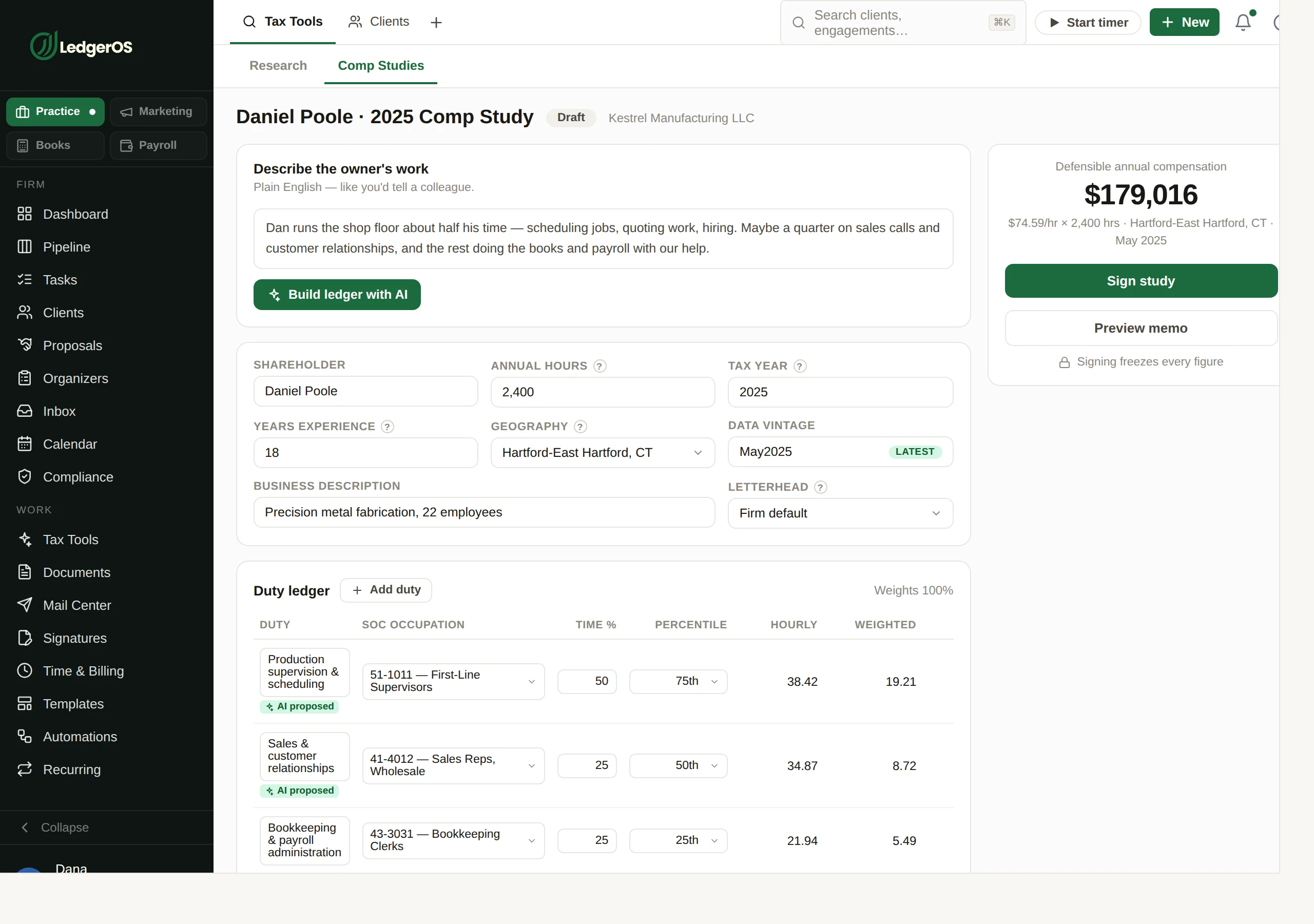
A reasonable-compensation study in LedgerOS: proposed duties, each matched to an SOC occupation code and wage percentile.

The number is arithmetic, not an opinion

Each duty resolves against the Bureau of Labor Statistics wage survey — the same data a valuation analyst reaches for — at the percentile you chose, for the year and area on the study. The composite is those blended by how much of the year each duty takes. The AI never proposes a salary. It proposes duties, and duties resolve to published wages.

  • Wages by SOC code and geography, at the p10 / p25 / p50 / p75 / p90 percentile you pick
  • Composite computed from the duty mix rather than from one job title
  • The survey year is recorded, so a memo says which vintage it was built on
  • Signing refuses outright if a duty has no published wage for that code and area

And it asks the question an examiner will

The cost approach gives you a figure. The independent investor test asks whether what is left after paying it still earns a fair return on the shareholder’s equity. It computes the residual and shows it against the return you require, as a pass or fail sitting next to the number — rather than as an exercise everyone knows about and nobody does.

The memo is the deliverable, and signing freezes it

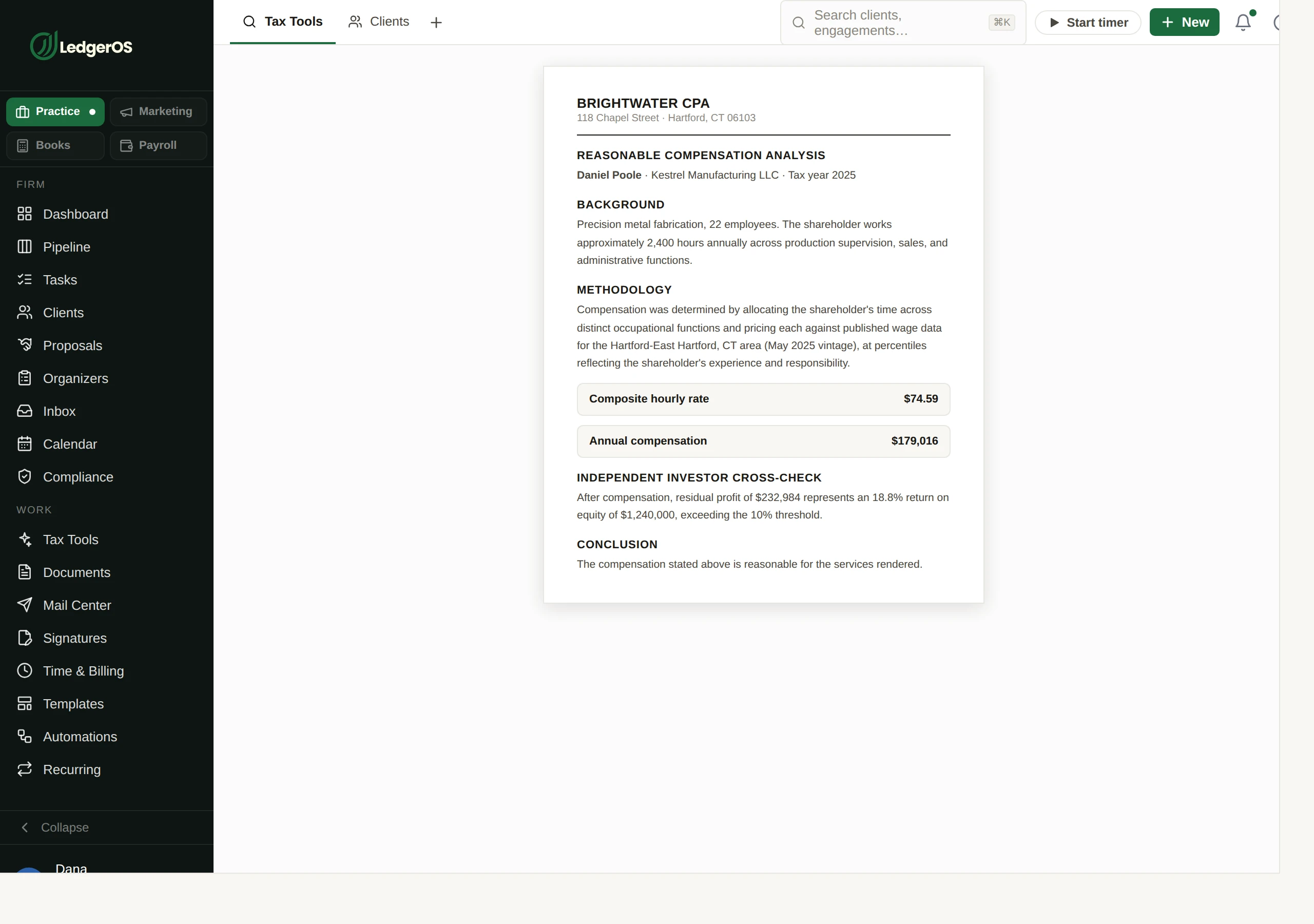
A sectioned memo on your letterhead — background, method, the investor cross-check, the factors considered, the conclusion — rendered to PDF and filed on the client as a workpaper for that year. Signing locks every figure in it, so a later revision to the wage data cannot quietly restate a memo you already handed someone.

  • Section IV sets out the multi-factor test the courts apply, not just the arithmetic
  • Each duty line cites its SOC code and the percentile used
  • The data source and survey year are stated in the footer
  • A signed study cannot be edited — corrections go through an amendment that links to the original
  • The shareholder can be sent the memo to acknowledge, if your firm works that way
The signed reasonable-compensation memo LedgerOS produces from a completed study.

No plan decides which clients get one

The specialist tools meter this: ten clients and one user on the entry plan, fifty and three on the next. That cap ends up choosing which of your S-corps get looked at — the obvious ones, and not the marginal one whose number has drifted for three years. Here it is on the seat, for every client, for everyone.

Questions

Where does the wage data come from?
The Bureau of Labor Statistics Occupational Employment and Wage Statistics survey, resolved per SOC occupation code and geography. The survey year is recorded on the study and stated in the memo, so a memo written this year says which vintage it rests on rather than implying it is current forever.
Does the AI decide the number?
No, and that is the point. It proposes the duty breakdown and maps each duty to a SOC code, which you correct. The figure is arithmetic on published survey wages at percentiles you choose. Nothing in that chain is a model’s opinion about what someone should be paid.
What geography does it use?
Whichever area you select on the study. The area is recorded on the memo alongside the survey year, so the basis for the figure is stated rather than assumed.
Is this only for S-corp shareholders?
That is what it is built for — the reasonable-compensation question a shareholder-employee has to answer. It is not a general executive compensation study.
How many studies can we run, and for how many clients?
As many as you like, for as many clients as you have, by anyone on your plan. There is no client cap and no per-study charge — it is part of the seat.

Next: DocumentsEvery client document, filed before you touch it.

Read on →

Ready to retire the stack?

One plan for the whole practice — $129 per seat, every Practice module included. Start your free trial today; migration support from your current tools comes standard.

14-day free trial · No credit card required · Cancel anytime