The size where the stack stops working
Two people can hold a practice in their heads. Six cannot, and the moment a seasonal preparer joins in January the gap between what the system knows and what the firm knows becomes the whole problem.
This is the size LedgerOS was built at — a four-staff, three-location tax and bookkeeping practice — and it is the size the defaults assume.
What usually goes wrong
Onboarding a seasonal hire takes a week you do not have
Seven logins, seven conventions, and whichever system happened to be breaking that week. Then they leave in April and you do it again.
Nobody can see the whole season at once
Who is waiting on a client, who is overloaded, what is late. The answer exists across four tools and one Monday meeting.
Review is where the work piles up
Returns queue behind one or two reviewers, and the queue is invisible until it is a crisis.
The modules that matter most here
All 18 are on every seat. These are the ones firms of two to ten tend to live in.
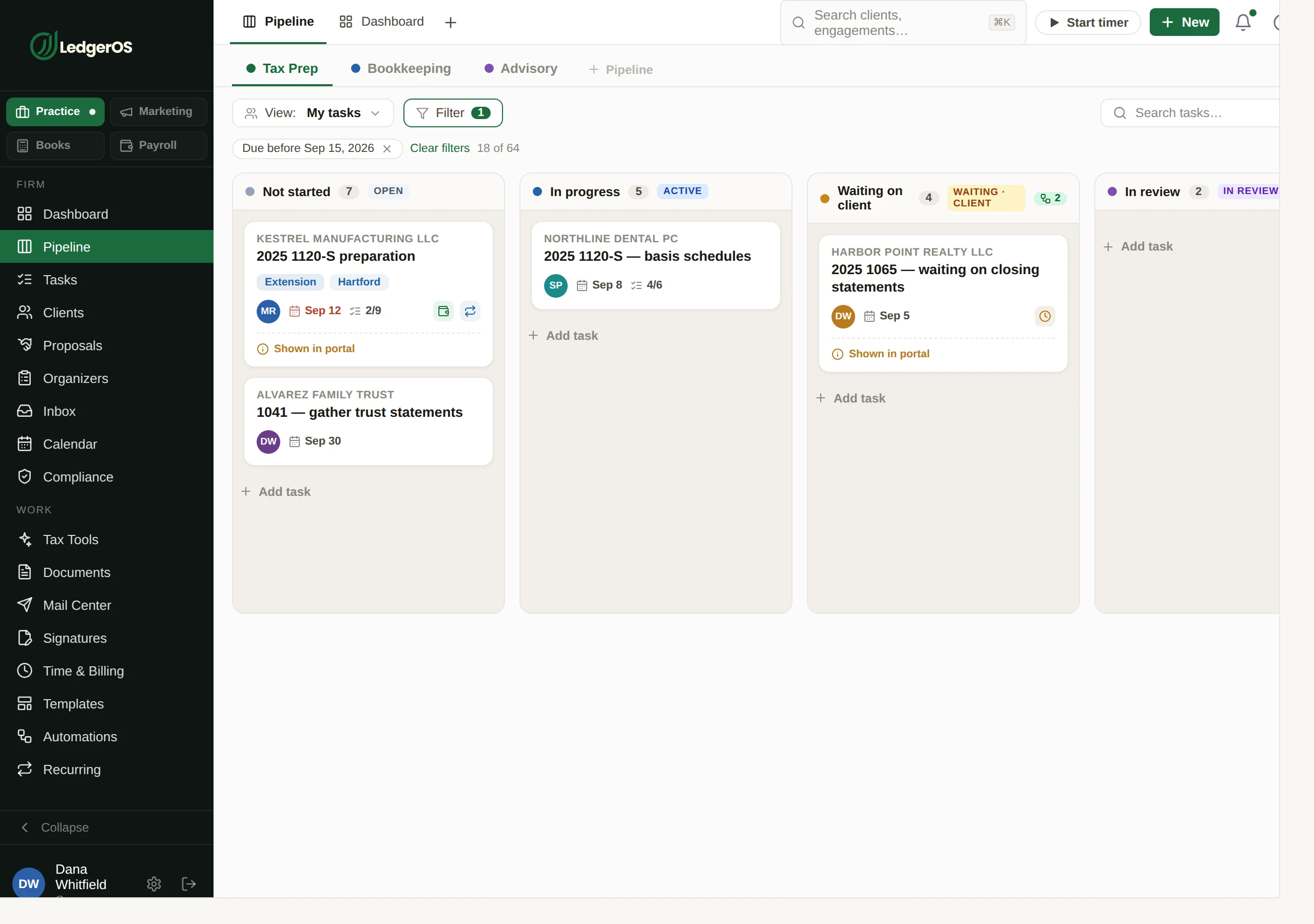
Pipeline
Where every return is, without asking anyone.
Tasks
Every job in the firm, attached to the client it belongs to.
Clients
Everything you know about a client, on one screen instead of five.
Documents
Every client document, filed before you touch it.
Automations
The chasing, the reminders and the status changes — done without you.
Time & Billing
From the timer to the deposit, without rekeying anything.
One login for a new hire, one board the whole firm reads the same way, and a per-seat price that does not make you ration who gets access.
Not quite your firm?
Ready to retire the stack?
One plan for the whole practice — $129 per seat, every Practice module included. Start your free trial today; migration support from your current tools comes standard.
14-day free trial · No credit card required · Cancel anytime